
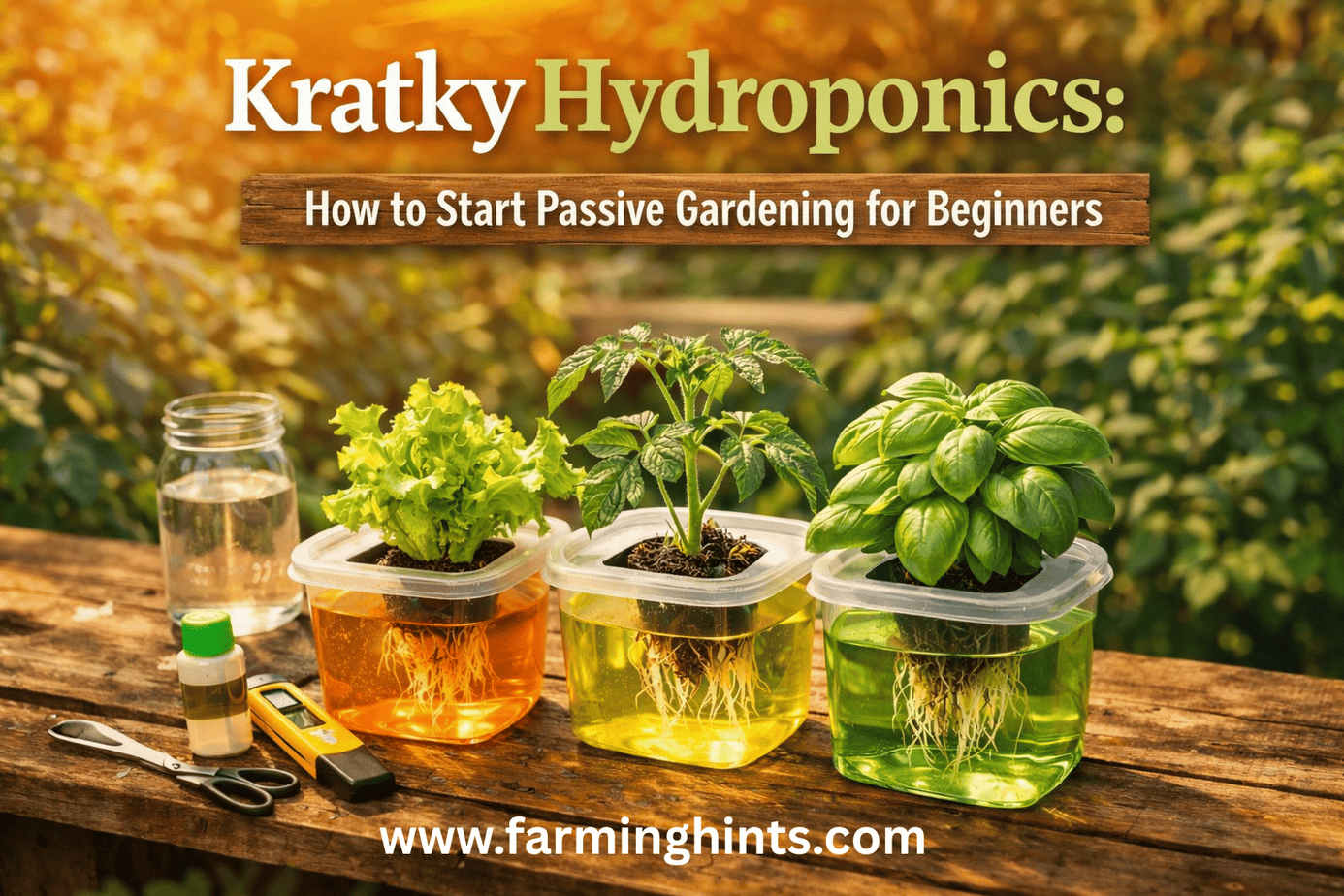
Imagine growing fresh vegetables at home without soil, messy pots, or expensive equipment. Moreover, hydroponics doesn’t always require electricity or complicated setups.
In fact, the Kratky Method proves that hydroponics can be simple, affordable, and beginner-friendly. Specifically, this passive system allows plants to grow with minimal maintenance, which makes it perfect for students, hobbyists, and budget-conscious gardeners (Kratky, 2009).
In today’s context, you’ll learn:
- What the Kratky Method is
- How it works
- What you need to start
- Best plants to grow
- Advantages and limitations
- How it compares to other hydroponic systems
What Is the Kratky Method?
The Kratky Method is a passive hydroponic system developed at the University of Hawaii (University of Hawaii CTAHR, 2023). Compared with traditional hydroponic systems, it requires no:
- pumps
- electricity
- constant water circulation
Once set up, the system largely maintains itself. Therefore, you only need to monitor nutrient levels occasionally, which makes it ideal for beginners (Trees.com Staff, 2024).
How the Kratky Method Works
Overall, the system is simple, yet ultimately effective:
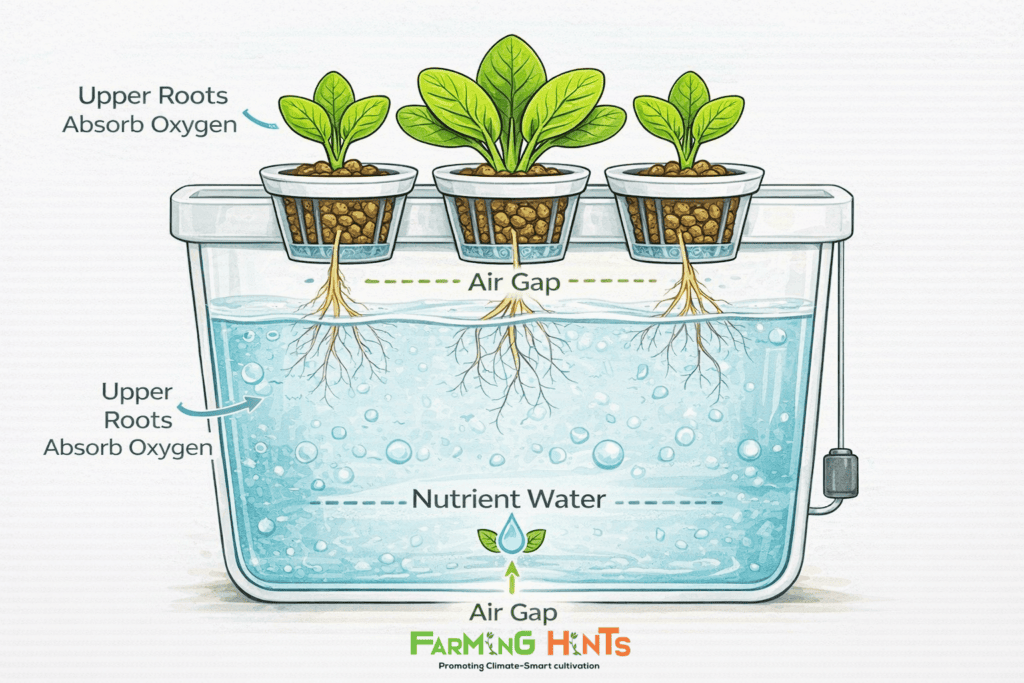
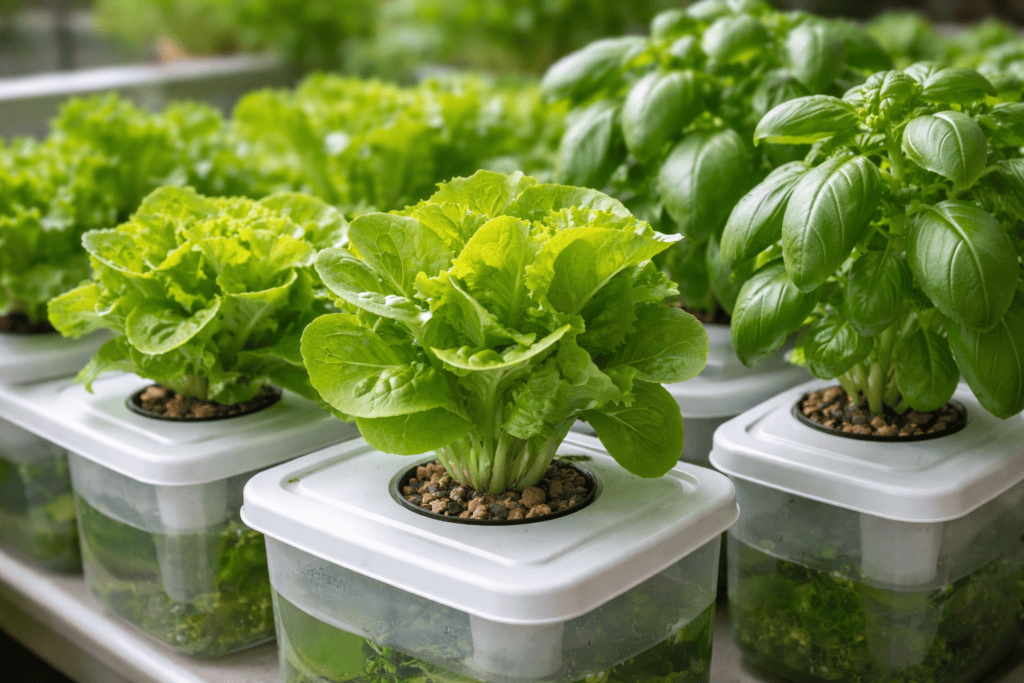
- Plants sit in net pots above a container filled with nutrient-rich water.
- Roots grow into two zones:
- Lower roots absorb water and nutrients.
- Upper roots remain in the air, absorbing oxygen.
- As water levels naturally drop, an air gap forms, thereby providing oxygen to the roots.
In simple terms, this natural separation eliminates the need for pumps or aerators, thus making the system truly passive (Jensen, 2018).
What You Need to Get Started
Even a small setup can work effectively. However, before you begin, it’s important to gather a few essential items. Here’s what you’ll need:
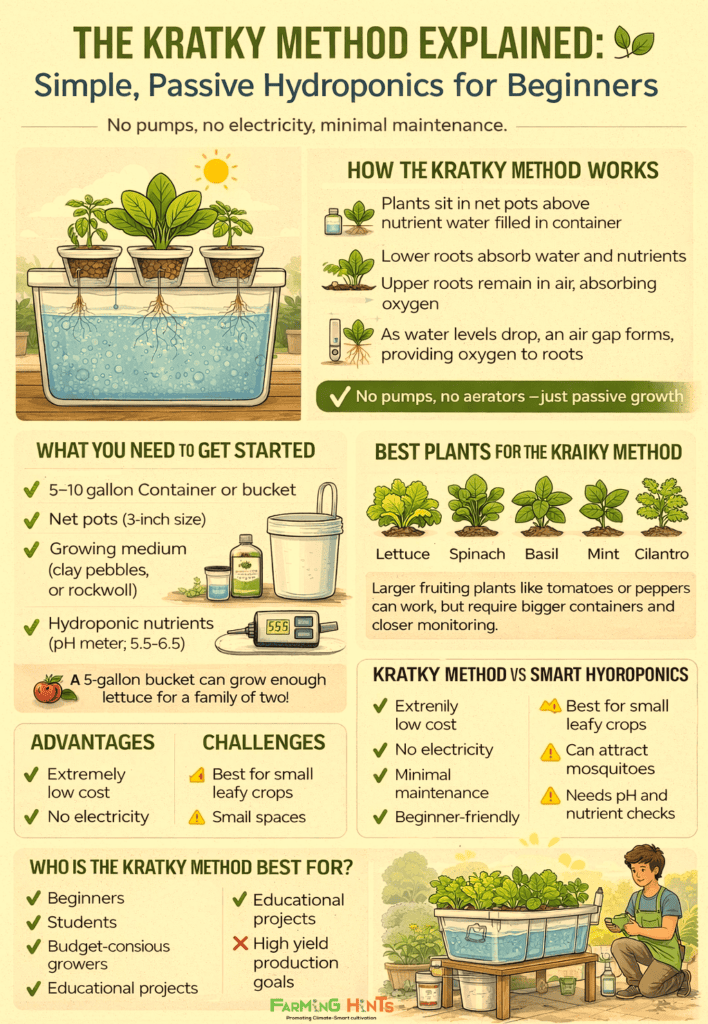
- Container or bucket with lid (5–10 gallons recommended)
- Net pots (3-inch size works best)
- Growing medium (clay pebbles or rockwool)
- Hydroponic nutrients
- pH meter and control kit (ideal range: 5.5–6.5)
Additionally, 💡 Tip: A 5-gallon bucket can grow enough lettuce for a family of two!
Once you have these items ready, setting up your Kratky system becomes straightforward and hassle-free, allowing you to start growing fresh vegetables in no time.
Best Plants for the Kratky Method 🌿
Notably, leafy greens thrive in this passive hydroponic system. For example, some of the easiest and most rewarding plants to grow include:
- Lettuce
- Spinach
- Basil
- Mint
- Cilantro
Furthermore, in the long run, larger fruiting plants such as tomatoes or peppers can also grow successfully. However, they require larger containers and closer monitoring to ensure optimal growth.
Overall, this makes the Kratky Method ideal for beginners and small-space gardeners, while also offering flexibility for those looking to experiment with more advanced crops over time..
Advantages of the Kratky Method
Overall, the Kratky Method offers several compelling benefits:
- Extremely low cost, making it accessible for students, hobbyists, and budget-conscious gardeners.
- No electricity required, which simplifies setup and reduces ongoing expenses.
- Minimal maintenance, allowing plants to grow passively without constant attention.
- Beginner-friendly, perfect for anyone new to hydroponics.
- Ideal for balconies, rooftops, and small spaces, enabling fresh vegetable growth even in urban environments.
In addition, this method encourages sustainable gardening with minimal environmental impact.
Challenges and Limitations ⚠️
However, the Kratky Method also comes with some limitations:
- Best suited for small leafy crops, as larger fruiting plants may require more space and attention.
- Standing water can attract mosquitoes, which means careful placement or covers are necessary.
- Occasional pH and nutrient checks are required to maintain healthy plant growth.
- Outdoor setups need protection from rain, otherwise nutrient dilution can affect plant performance.
Nevertheless, with proper planning and monitoring, these challenges can be easily managed, making the Kratky Method a highly practical option for home gardeners.
Kratky Method vs Smart Hydroponics
| Feature | Kratky Method | Smart Hydroponics |
|---|---|---|
| Electricity | ❌ No | ✅ Yes |
| Automation | ❌ No | ✅ Full |
| Cost | Low | Medium–High |
| Maintenance | Low | Very Low |
| Crop Range | Limited | Wide |
💡 Ultimately, the Kratky Method is best for cost-effective simplicity, whereas smart systems aim for high-tech automation and superior yield
Who Should Use the Kratky Method?
✔ Beginners and hobbyists
✔ Students or educational projects
✔ Budget-conscious growers
✖ High-yield commercial growers
Conclusion
The Kratky Method makes hydroponics accessible for everyone. In addition, it removes financial and technical barriers, yet it continues to provide fresh, homegrown vegetables (Kratky, 2009; Jensen, 2018).
For anyone seeking simplicity over automation, this is the perfect starting point.
Start small, enjoy your harvest, and watch how easy passive hydroponics can be! 🌿
References
- Kratky, B. A. (2009). Non-Circulating Hydroponic Method for Growing Leafy Greens. University of Hawaii.
- University of Hawaii CTAHR. (2023). Kratky Hydroponics for Home Growers.
- Trees.com Staff. (2024). The Kratky Method – Grow Food the Passive Hydroponic Way.
- Jensen, M. H. (2018). Hydroponics Worldwide. Acta Horticulturae.